

Matcha is everywhere right now - in cafes, on TikTok, at Gregg’s - but what is matcha? Where does it come from, what does it do, and why is everyone suddenly obsessed? We're here to answer all of it, because after years of blending the UK's largest flavoured matcha collection, we know a thing or two about this brilliant green powder.
Consider this your one-stop guide to everything matcha.
What Is Matcha?

Matcha is a type of green tea powder primarily from Japan - but not just any green tea. It's made by finely grinding specially grown tea leaves into a bright, vibrant powder. When you drink matcha, you're not steeping leaves and discarding them like you would with regular tea. You're whisking the whole leaf into your drink and consuming it entirely. That's a big part of why matcha is so potent - you're getting the full goodness of the leaf in every single sip.
The result is a drink that's richer, creamier, and more complex than regular green tea - with a beautiful seaweedy, umami flavour and that famous vivid green colour.
How Is Matcha Made?
Matcha starts its life as tencha - green leaf flakes made from steaming, drying and de-veining green tea leaves. What makes tencha (and therefore matcha) different from regular green tea comes down to one key thing: shade growing and de-veining.
Around 4–6 weeks before harvest, the tea plants are shaded from direct sunlight - traditionally using straw or bamboo shelters, today often with black netting. This shade forces the plant to work harder, producing more chlorophyll (which gives matcha its vivid green colour) and significantly increasing the amino acid content of the leaves - particularly L-theanine, which is responsible for much of what makes matcha special.
The leaves are hand-picked, steamed to halt oxidation, dried, and carefully sorted. The stems and veins are removed, leaving only the pure leaf. Those leaves are then stone-ground into a powder, a process that, for the most efficient grinders, takes around a whole hour to produce just 100g of matcha. Rushing it would create friction heat that would damage the delicate flavour compounds.
The result? That silky, brilliant green powder you whisk into your morning latte.
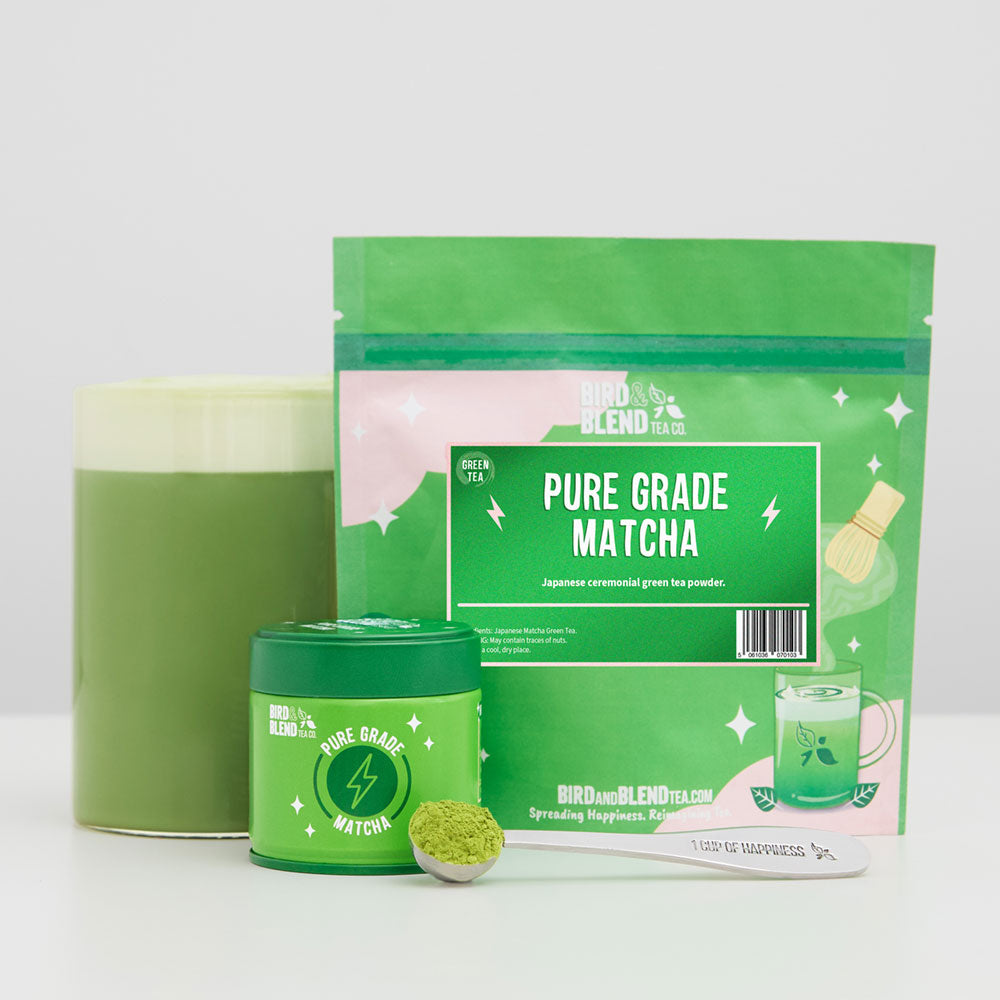
At Bird & Blend, all of our matcha's use pure ceremonial grade Japanese matcha, the same Great Taste Award-winning base, whether you're drinking our Pure Grade or our Vanilla Ice Cream blend.

Is All Matcha The Same?
Not at all - and this matters hugely! You get what you pay for. Quality varies enormously depending on where the matcha, is grown and how it's grown, and how it's processed. Best premium matcha is from Japan, made only from shade-grown ground tencha. In fact, if you want the best, it must also be made from spring harvest. This level of quality costs more - but it is most definitely worth it!
Cheaper matchas are often made from grinding regular green tea. This means:
-
Not shade grown, therefore lacks the vibrant green colour and has lower benefit.
-
Not de-veined, therefore has a bitter taste, and lacks the depth and umami unique to genuine matcha.
-
May not comply with other quality regulations for example pesticides residues.
-
May be bulked out with sugar or other non-matcha green tea.
Bird & Blend matchas are all genuine ceremonial pure grade from Japan and are quality compliant.
Do not be duped! What to look for:
-
Japanese origin - Best premium matcha comes from Japan . Other origin "matcha" is often a different product entirely and won't have the same flavour or quality.
-
Ceremonial grade - the top finest grades, made in spring have the best quality.
-
Vibrant green colour - good matcha is a vivid, bright green. Yellow or khaki-coloured matcha is a sign of lower quality or poor storage.
-
Fine, smooth texture - quality matcha should feel like a very fine silk powder, not gritty or coarse.
-
Smooth umami flavour - it should taste naturally slightly sweet and rich, not predominantly bitter or flat.
All of our matchas at Bird & Blend use ceremonial pure grade Japanese matcha grown and processed to the highest specifications - the same Great Taste Award-winning base in every single blend.
What Does Matcha Taste Like?
Pure matcha has a distinctive, rich, seaweed, vegetal umami flavour that some relate to edamame! It is smooth and slightly sweet when made properly, with a texture and depth that regular green tea simply doesn't have. Think of it less like a cup of tea and more like a concentrated, vibrant green flavour experience.
Good quality matcha made correctly should not taste bitter. If yours does, it's usually down to water that's too hot or too much powder - both very easy fixes. Check our complete guide to making matcha for everything you need to know.
New to matcha and not sure about the flavour? Our flavoured matcha blends are the easiest way in - they use the same pure Japanese matcha base but with delicious flavours like Vanilla Ice Cream, Salted Caramel, or Strawberries & Cream that make the whole experience immediately approachable. See our beginner's guide for recommendations.
Flavoured Matcha

We go beyond the taste of pure matcha. Blending matcha powder with delicious flavours is our special expertise! It enables us to bring you amazing taste experiences that you cannot find anywhere else.
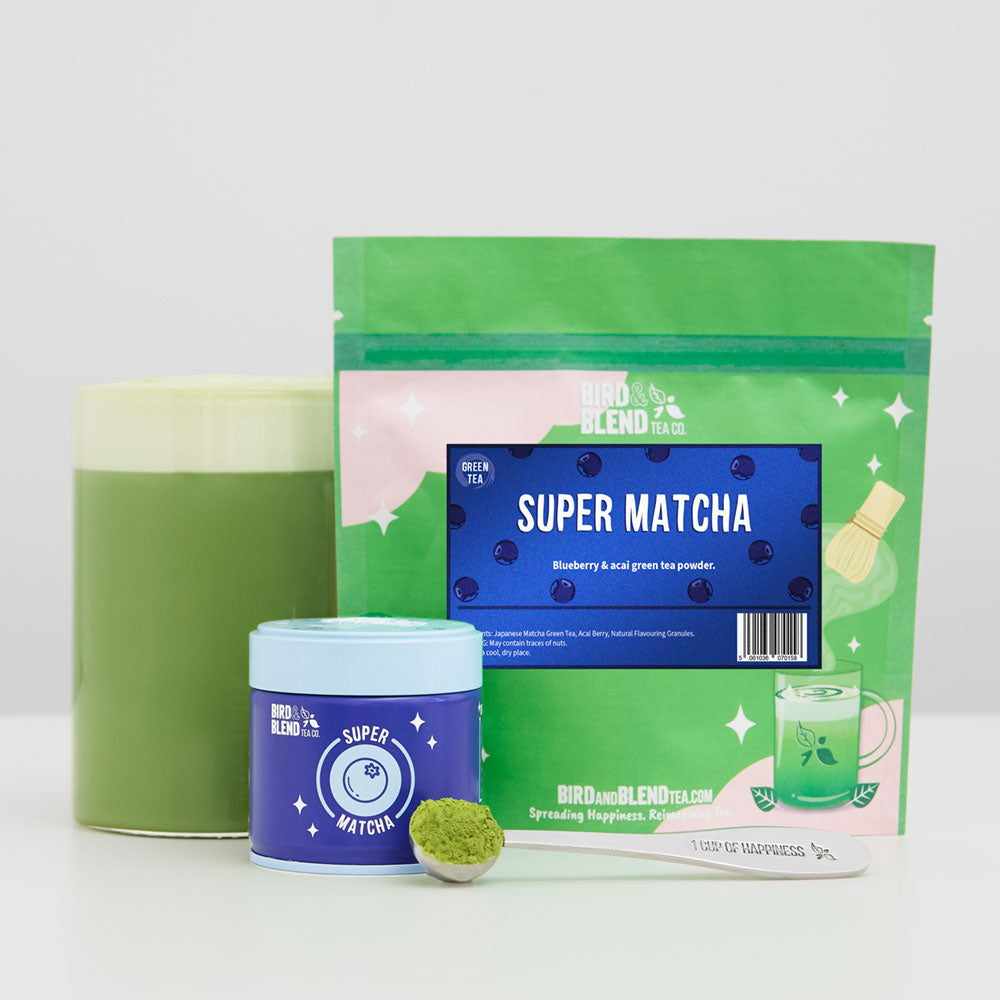
Layered on the umami of matcha are a whole range of fruity, decadent ice cream and indulgent mouth-watering flavours - it means everyone can find a matcha they love - from blueberry to birthday cake and mango sorbet, we have you covered!
Bird & Blend have the largest flavoured matcha collection.
Does Matcha Have Caffeine?
Oh yes - and it's one of matcha's most celebrated qualities. It is what gives it that energising and focused effect. But it's not caffeine in the way you might be used to experiencing it.
A ½ teaspoon serving of matcha contains about half as much as a cup of regular coffee, but more than a regular green tea, which has about a third as much as a cup of coffee
But here's what makes matcha genuinely different: that caffeine works alongside a high concentration of L-theanine (the amino acid boosted by the shade-growing process), and together they create something quite special.
L-Theanine has a relaxing effect on the body, meaning that it modulates how your body absorbs caffeine, so you don’t get the same jittery effect as when drinking coffee! This is what gives the zen effect, and has made it perfect for supporting meditation and has contributed to raising matcha’s popularity recently!”
When combined with caffeine, it smooths out the sharp stimulant hit you'd normally get - delivering energy that rises gradually, lasts longer, and comes down gently without a crash. No jitters, no mid-morning slump, no 3 pm headache.
Caffeine (energy/stimulant) + L-Theanine (modulation, zen ) = Calm Focus
Matcha drinkers often describe this as "calm focus" - alert and energised without feeling wired. It's the same reason matcha has been used in Zen Buddhist meditation practices for centuries; monks used it to maintain clear focus during long periods of seated meditation.
Matcha vs Green Tea - What's The Difference?
Matcha is green tea, technically - both come from the same plant (Camellia sinensis). But the similarities largely end there.
|
Matcha |
Green Tea |
|
|---|---|---|
|
Growing method |
Shade-grown for 2–6 weeks before harvest |
Generally grown in open sunlight |
|
Processing |
Complex - leaves steamed, dried and deveined then ground into powder |
Simple - leaves pan-fried or steamed, then rolled and dried |
|
How you drink it |
Whisked into water - whole leaf consumed |
Leaves steeped, then removed |
|
Caffeine |
Roughly ½ compared to a cup of coffee |
Roughly 1/3 compared to a cup of coffee |
|
L-theanine |
Much higher - boosted by shading |
Present but lower |
|
Flavour |
Rich, seaweedy, umami, creamy |
Lighter, more delicate, sometimes grassy, refreshing |
|
Colour |
Vivid, vibrant green for good matcha. Solid colour in cup |
Pale, see-through yellow-green in the cup |
|
Antioxidants |
High - whole leaf consumed |
Lower - as leaves thrown out after steeping |
The bottom line: because you're consuming the whole leaf rather than an infusion of it, you're getting significantly more of everything - caffeine, L-theanine, antioxidants, and flavour - in every cup.
Want the full breakdown? See our dedicated matcha vs green tea guide.
Matcha vs Coffee - The Key Differences
Millions of people are making the switch from coffee to matcha - or adding it alongside their morning cup. Here's a quick comparison:
|
Matcha |
Coffee |
|
|---|---|---|
|
Caffeine |
Yes |
Yes, higher than matcha |
|
Energy effect |
Focus - Slow release, calm focus, no crash |
Fast spike, then often a crash |
|
L-theanine |
Zen High - smooths and extends caffeine |
None |
|
Jitters/anxiety |
Rare - L-theanine buffers the effect |
Common at higher doses |
|
Antioxidants |
High (EGCG catechins) |
Also contains antioxidants |
|
Taste |
Seaweedy, umami, creamy |
Bold, bitter, roasty |
|
Preparation |
Whisked with water or milk |
Brewed or extracted |
Matcha isn't necessarily a replacement for coffee - it's a different experience entirely. For the full picture, see our dedicated matcha vs coffee guide.
What Are The Benefits Of Matcha?

Matcha has been celebrated for its health properties for centuries, and modern research is increasingly backing up what Japanese culture has known for a long time. Here's an honest overview - no overclaiming, just what the evidence actually says:
Slow-release, sustained energy: Thanks to the L-theanine and caffeine combination, matcha provides a gradual, lasting energy boost without the spike-and-crash associated with coffee or energy drinks. Most people report feeling focused and alert for 3–6 hours after a single serving.
Focus and mental clarity: L-theanine is associated with increased alpha wave activity in the brain - essentially a state of relaxed alertness. Combined with caffeine, it's been shown to improve concentration, reaction time, and mental performance. This is the "calm focus" effect matcha is famous for.
Rich in antioxidants: Matcha is high in catechins - particularly EGCG (epigallocatechin gallate), one of the most studied antioxidants in the world. Because you consume the whole leaf rather than a water infusion, matcha delivers far more antioxidants per cup than steeped green tea.
Stress support: L-theanine has also been associated with reduced levels of the stress hormone cortisol and a calming effect on the nervous system - which is why matcha can feel both energising and grounding at the same time.
Vitamins and minerals: Matcha contains vitamins A, C, E and K, as well as minerals including potassium, calcium, and iron - all delivered through the whole leaf.
A note on health claims: we always recommend speaking to a healthcare professional if you have specific health concerns. Matcha is a brilliant daily drink, not a medicine.
Ready To Try Matcha?
Now you know what it is, where it comes from, and what it can do - the fun bit begins. Here's where to go next:
- New to matcha? Our Beginner's Guide will help you find the perfect first flavour.
- Ready to explore? Browse our full flavoured matcha collection
- Want to make it perfectly? Follow our step-by-step making guide
- Buying for someone else? See our matcha gift guide
Welcome to the wonderful world of matcha, Teabird. You're going to love it here.