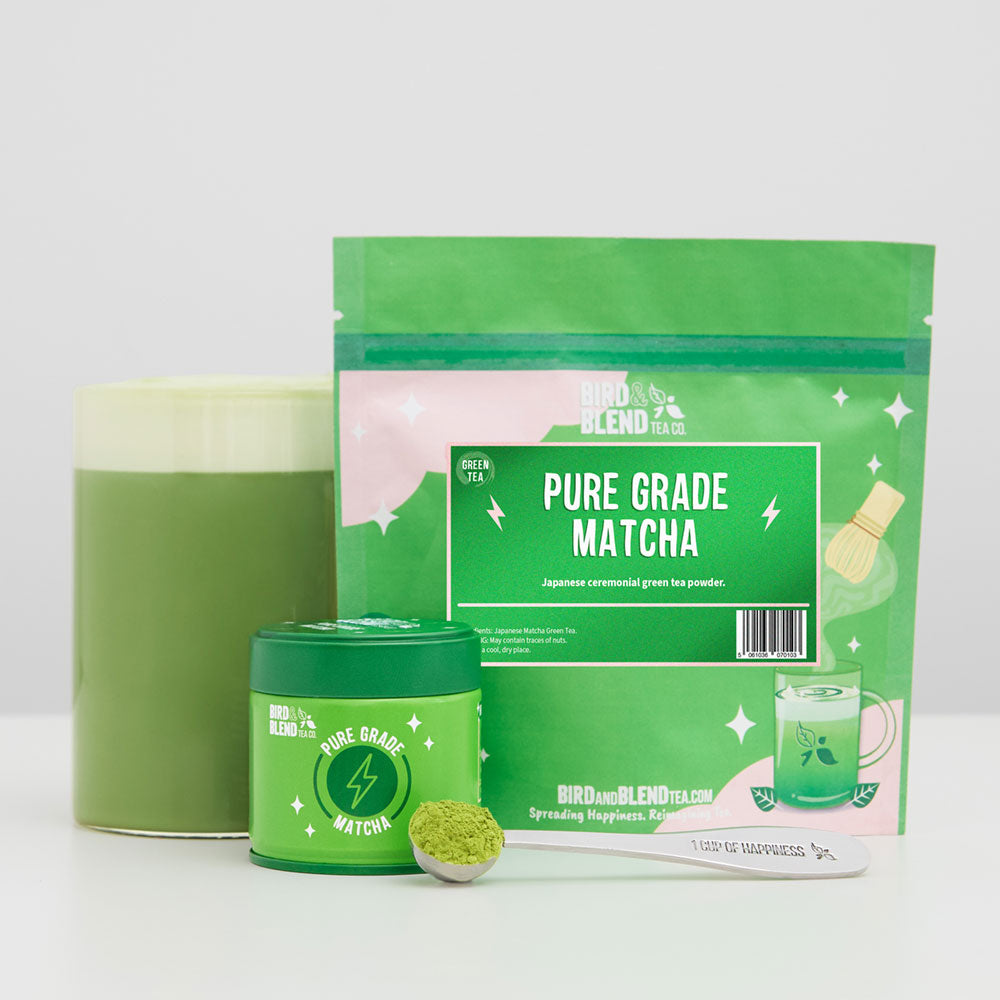


If you've ever stood in a tea shop wondering whether matcha is just a fancy, overpriced version of green tea - you're not alone. It's one of the questions we get asked most, and it's a genuinely good one when it comes to matcha vs green tea.
The short answer: they're related, but they're really not the same thing. The longer answer is a lot more interesting - and it explains why matcha has taken on a life of its own as a daily drink rather than just another green tea option.
They Come From The Same Plant - But That's Where The Similarity Ends
Both matcha and green tea come from the same plant: Camellia sinensis. So yes, technically, matcha is a type of green tea. The key differences all come down to three things: how the plant is grown, how the leaves are processed, and how you actually drink it. Change all three and you end up with a completely different experience - different flavour, different caffeine effect, different nutrients, different ritual.
How They're Grown Differently
Regular green tea - like sencha or gunpowder green - is grown in open sunlight. The plants grow normally, are harvested, quickly heat-treated to stop oxidation, and then dried and rolled into the leaves or pellets you'd steep in a teapot or mug.
Matcha starts the same way, but about 3–6 weeks before harvest the plants are shaded from sunlight.
Deprived of direct sunlight, the plants work harder. They produce significantly more chlorophyll (which is why matcha is that vivid, almost neon green rather than the pale yellow-green of a steeped green tea cup). More importantly, they produce much higher levels of L-theanine - the amino acid that gives matcha its calm, focused energy.
The result is a leaf that's fundamentally different in composition to a regular green tea leaf - even from the same plant, even from the same farm.
How They're Processed Differently
After harvest, green tea leaves are typically steamed or pan-fired, then rolled and dried. They end up as the loose leaves or teabags you'd recognise - ready to steep.

Matcha leaves go through a more labour-intensive process. After steaming and drying, the stems and veins are carefully removed, leaving only the pure leaf - called tencha. Those leaves are then stone-ground into an ultrafine powder - a slow, traditional process that takes around 20 minutes to produce just 10 grams of matcha. Rush it and friction heat damages the delicate flavour compounds. That powder is matcha, because it's a powder rather than a leaf, the way you drink it is entirely different too.

How You Drink Them Differently - And Why It Matters
With green tea, you steep the leaves in hot water and drink the infusion. The leaves do their job and you discard them.

With matcha, you whisk the powder directly into water or milk. You're not steeping it - you're consuming the entire leaf every single time.

This is probably the most important difference of all, because it means you're getting the full nutritional profile of the leaf in every cup - not just what happens to dissolve into the water during steeping. All the antioxidants, all the L-theanine, all the goodness.
The Caffeine and Energy Difference
Both contain caffeine - but the experience is noticeably different.
Green tea has a relatively low caffeine content - typically around 45 mg per cup. It's a gentle, light pick-me-up that most people can drink throughout the day without any issue.
Matcha contains around 60mg of caffeine per serving - higher than green tea, though still lower than coffee. But the key isn't the caffeine alone. It's the high concentration of L-theanine that makes the matcha energy experience genuinely different.
L-theanine smooths out the stimulant effect. The energy rises gradually, lasts longer, and comes down gently without a crash. No jitters, no spike, no slump. This is what people describe as "calm focus" - alert and clear-headed without feeling wired. Green tea has L-theanine too, which is part of why it feels calming. Matcha just takes that quality and turns it up considerably.
The Flavour Difference


If you love green tea and you've never tried matcha, go in with an open mind rather than expecting a stronger version of what you already know. They share DNA but they taste like different drinks.
And if the pure matcha flavour feels a bit full-on at first? Our flavoured matcha blends - Vanilla Ice Cream, Strawberries & Cream, Lemon Matcha - use the same pure Japanese matcha base with flavours that make the whole thing immediately approachable.
Nutrients: How Do They Compare?
Because you're consuming the whole leaf with matcha rather than a diluted infusion, the nutrient comparison isn't particularly close.
|
Matcha |
Green tea |
|
|---|---|---|
|
Antioxidants (EGCG catechins) |
Very high - whole leaf consumed |
Good - diluted through steeping |
|
L-theanine |
High - boosted by shade growing |
Present but lower |
|
Caffeine |
60mg per serving |
45mg per cup |
|
Chlorophyll |
Very high - shade growing |
Lower |
|
Vitamins A, C, E, K |
Present - whole leaf consumed |
Lower - mostly remain in leaves |
Both are genuinely brilliant things to be drinking. If you're reaching for tea partly for its nutritional benefits, matcha delivers considerably more per cup.
So Should You Switch From Green Tea To Matcha?
Honestly - you don't have to choose. Lots of green tea lovers add matcha to their routine rather than replacing it entirely.
Stick with green tea if... you want something light and refreshing to sip throughout the day or you prefer a gentler, more subtle caffeine experience
Try matcha if... you want more sustained, focused energy from your morning drink or you love the idea of a latte ritual - hot or iced
Have both if... you love tea and want more of it in your life. Genuinely the most valid option and we fully support this approach.
Curious About Matcha? Here's Where To Start
The easiest first step is a flavoured blend - something familiar enough to feel approachable, exciting enough to feel new. Our Beginner's Guide to Matcha has honest recommendations and tasting notes to help you find your first favourite.
Explore our full matcha collection
Welcome to the wider world of matcha, Teabird. We think you're going to love it here.